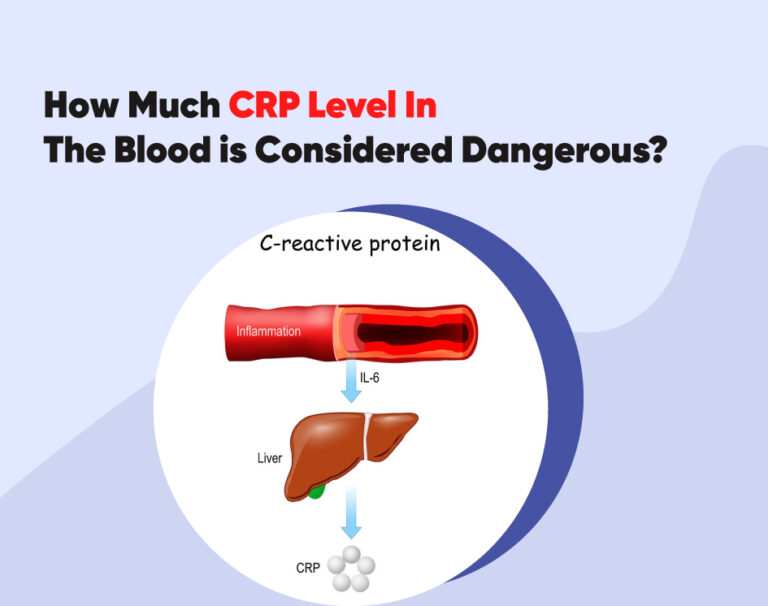
CRP is a test for the level of protein called c-reactive protein present in your blood. This protein is released by your liver when there is an inflammation in your body. It acts as an early indicator of inflammatory condition in our body.
Keep reading to know what CRP is, what causes its levels to rise, how to test for it, and most importantly, how to interpret CRP levels to determine if they are dangerous.
What is C- reactive protein?
C-reactive protein, is a protein made by the liver when the body experiences inflammation. It is how our body responds to injuries, infections, or autoimmune diseases like rheumatoid arthritis.
This protein acts as a defense mechanism against these health challenges. It signals a higher chance of developing heart problems or certain types of cancer.
During times of inflammation, the level of CRP in the bloodstream increases quickly.
You can check your CRP levels in the blood if you want to identify any potentional inflammation or to monitor how well medical treatment is working or how a condition is progressing.
In simpler terms, measuring CRP is like having a health indicator alerting us to potential issues and tracking how the body responds to them.
Here’s a short clip where I explain what is CRP in Telugu.
Normal Range of CRP Level in the Blood
Typically, CRP levels are low or undetectable in healthy individuals. A normal range falls between 0 to 3 milligrams per liter (mg/L) of blood.
Elevated levels may signal an underlying health concern.
While there is no such thing as a “low” CRP level, the normal range is generally less than 0.9 mg/dL.
CRP Level (mg/L)
Category
What It Indicates
0 – 3 mg/L
Normal
No significant inflammation. Typical for healthy individuals.
3 – 10 mg/L
Mildly Elevated
Minor inflammation, recent infection, mild viral illness, or lifestyle factors (stress, smoking, obesity).
10 – 40 mg/L
Moderately High
More significant inflammation; common in bacterial infections, autoimmune flare-ups, or inflammatory disorders.
40 – 200 mg/L
High
Strong inflammatory response, often seen in severe infections, active autoimmune disease, and major tissue injury.
> 200 mg/L
Very High / Critical Range
Typically associated with severe bacterial infections, major trauma, sepsis, or advanced inflammatory disease; requires urgent medical evaluation.
What leads to an increased CRP level?
CRP levels can be elevated in response to various conditions, including infections, autoimmune diseases, cancer, and cardiovascular disease.
Bacterial and fungal infections can cause a rapid rise in CRP levels. Autoimmune diseases, such as rheumatoid arthritis and systemic lupus erythematosus (SLE), can cause chronic elevation of CRP levels, indicating ongoing inflammation.
Additionally, CRP levels can be increased in conditions like inflammatory bowel disease, osteomyelitis, arthritis, and pelvic inflammatory disease.
Should you be worried?
High CRP levels don’t always signal a condition that needs treatment. Mild elevation can stem from smoking, obesity, recent injuries, or existing health issues.
If your CRP levels are abnormal, addressing the root cause is the fastest way to bring CRP back to normal.
Tests to Measure CRP Levels
CRP levels can be measured through a normal blood test. The test measures the amount of CRP in the blood, and the results are reported in milligrams per liter (mg/L).
Conclusion
In short, CRP level is a marker not a diagnosis. Identify the cause, get treatment for the cause, and the levels typically settle on their own.
Regular monitoring with lifestyle adjustments will help you to manage inflammation and reduce the risk of associated health issues.
Consult with a healthcare professional for personalized guidance and a comprehensive approach to maintaining optimal CRP levels and overall well-being.
Frequently Asked Questions
What happens if your CRP is high?
What happens if your CRP is high?
A high CRP level can indicate inflammation in the body, which can be caused by various conditions such as infections, autoimmune disorders, or chronic diseases. It may also be a risk factor for cardiovascular diseases.
What happens if CRP is positive?
What happens if CRP is positive?
A positive CRP test indicates the presence of inflammation in the body, which can be a sign of infection, tissue injury, or chronic diseases like rheumatoid arthritis or inflammatory bowel disease.
How to reduce CRP level by food?
How to reduce CRP level by food?
Foods that can help reduce CRP levels include those rich in antioxidants and anti-inflammatory properties, such as fruits, vegetables, whole grains, nuts, seeds, fatty fish, and olive oil.
What is the treatment for high CRP?
What is the treatment for high CRP?
The treatment for high CRP levels may involve addressing the underlying condition causing inflammation, such as infections, autoimmune diseases, or lifestyle changes to reduce inflammation.
What foods cause high CRP?
What foods cause high CRP?
Foods that may contribute to higher CRP levels include processed foods, sugary beverages, refined carbohydrates, and foods high in trans fats and saturated fats.
What is a normal CRP level?
What is a normal CRP level?
A normal CRP level is less than 10 mg/L. However, the normal range may vary slightly depending on the laboratory and the specific assay used for testing.
Why does CRP increase?
Why does CRP increase?
CRP increases in response to inflammation in the body, which can be caused by infections, injuries, autoimmune disorders, or chronic diseases.
How much CRP is safe?
How much CRP is safe?
A CRP level of less than 1 mg/L is considered low risk for cardiovascular diseases, while levels between 1-3 mg/L indicate moderate risk, and levels above 3 mg/L indicate high risk.
Which infection causes high CRP?
Which infection causes high CRP?
Various infections, including bacterial, viral, and fungal infections, can cause an increase in CRP levels as part of the body immune response to the infection.
Which doctor to consult for high CRP?
Which doctor to consult for high CRP?
A primary care physician can initially evaluate and manage high CRP levels. Depending on
What should you not eat when CRP is high?
What should you not eat when CRP is high?
When CRP is high, it is advisable to avoid foods that can promote inflammation, such as processed foods, sugary snacks, refined carbohydrates, and foods high in trans fats.
How can I lower my CRP naturally?
How can I lower my CRP naturally?
Lifestyle changes such as maintaining a healthy weight, regular exercise, quitting smoking, and eating a diet rich in fruits, vegetables, whole grains, and healthy fats can help lower CRP levels naturally.
How can I control my CRP at home?
How can I control my CRP at home?
To help control CRP levels at home, focus on a healthy lifestyle including regular exercise, stress management, a balanced diet, and avoiding smoking and excessive alcohol consumption.
How much crp level is dangerous in a child?
How much crp level is dangerous in a child?
In children, a C-reactive protein (CRP) level higher than 10 mg/L is considered significantly elevated and may indicate a more severe inflammatory process or infection.