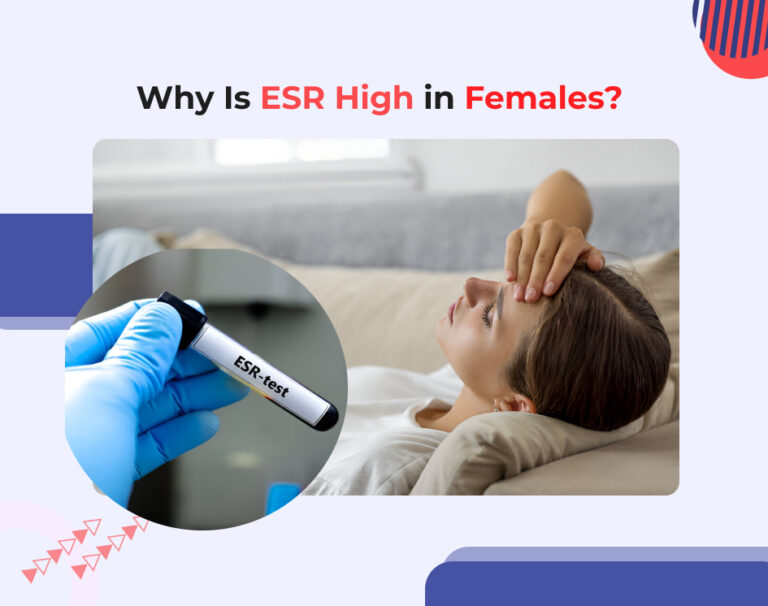

If your recent blood report shows a high ESR (Erythrocyte Sedimentation Rate), you’re not alone. Many women, even without significant illness, notice elevated ESR levels. But what does it mean, and should you worry?
Whether you’re managing a chronic condition or just trying to decode your lab reports, this guide will give you clear, useful insights.
What Is ESR?
Erythrocyte Sedimentation Rate (ESR) is an affordable and straightforward blood test that checks how quickly red blood cells settle at the bottom of a test tube within one hour.
A faster rate suggests inflammation in the body.
ESR is not disease-specific but serves as an alert signal that something may be wrong internally.
Think of it as your body’s silent alarm system for chronic infections, autoimmune disorders, or other hidden issues.
Normal ESR Levels in Females
While ESR varies by lab, age, and menstruation status, the general ranges for females are:
| Age Group | Normal ESR (mm/hr) |
| Below 50 | 0–20 |
| Above 50 | 0–30 |
Higher values may be considered normal in:
- Pregnancy
- Menstruation
- Anemia
Always correlate ESR results with symptoms and other lab markers for accuracy.
Why Is ESR High in Females?
Hormonal Fluctuations
Throughout a woman’s life, hormonal changes affect inflammatory markers. During the menstrual cycle, estrogen and progesterone levels can influence immune response, leading to a mild increase in ESR.
Pregnancy
In pregnancy, ESR can be significantly elevated. Sometimes 3 to 4 times the normal range. This is due to increased plasma volume, hormonal shifts, and changes in blood proteins. It’s considered a normal physiological response.
Infections
Any ongoing infection like a urinary tract infection (UTI), sinus infection, or even a dental abscess can trigger inflammation, pushing ESR levels up.
Autoimmune Conditions
Women are more prone to autoimmune diseases like:
- Lupus
- Rheumatoid Arthritis
- Hashimoto’s Thyroiditis
These conditions create chronic inflammation, often reflected in blood tests.
Anemia
Iron deficiency anemia is common in women and lowers the red blood cell count. Since ESR measures how fast red blood cells settle, fewer or abnormal cells settle faster, inflating the ESR result.
Menstrual Cycle and Pregnancy
Hormonal changes and increased plasma volume during menstruation or pregnancy can naturally elevate ESR levels.
Chronic Inflammatory Disorders
Conditions like:
- PCOS
- Endometriosis
- Irritable Bowel Syndrome (IBS)
may keep inflammation levels slightly elevated over time.
Obesity or Metabolic Syndrome
Obesity is often associated with low-grade chronic inflammation, which can contribute to elevated ESR levels.
Dental Infections or Gum Disease
Surprisingly, poor oral health can be a culprit. Infections like periodontitis (gum disease) or dental abscesses may go unnoticed but raise ESR levels as the body reacts to chronic inflammation.
Is High ESR Dangerous for Women?
Not necessarily. However, significantly high values or consistently elevated ESR may indicate an underlying medical condition.
When to be concerned:
- ESR over 50 mm/hr with unexplained symptoms
- Sudden spike in ESR
- Accompanied by fever, fatigue, or joint pain
How Is High ESR Diagnosed and Treated?
Diagnosis:
Doctors usually combine ESR with:
- CRP (C-Reactive Protein)
- CBC (Complete Blood Count)
- Iron Studies
- Thyroid Profile
- Dental X-rays or physical examination of the mouth if oral infection is suspected
Treatment:
ESR levels normalize once the underlying issue is treated:
- Antibiotics for infections
- Iron supplements for anemia
- Anti-inflammatory drugs for autoimmune diseases
- Dental treatment for infections or gum disease
Ways to Lower ESR Levels
You can adopt several lifestyle habits to help reduce systemic inflammation:
- Maintain good oral hygiene
- Anti-inflammatory foods: turmeric, berries, leafy greens
- Omega-3 fatty acids: from fish or flaxseeds
- Exercise and manage stress
- Hydration
- Treat underlying anemia or thyroid issues
However, do not self-medicate, consult your physician or dentist first.
Conclusion
A high ESR in females doesn’t mean you’re sick but it does mean your body is responding to something. It is often due to natural physiological processes like menstruation or pregnancy. However, if persistently high or linked with symptoms, it could point to an underlying condition such as infection, autoimmune disease, or anemia.
Women, especially those who are juggling work, family, and health should take these markers seriously.
Your ESR might just be the clue you need to catch something early and take action.