
By Dr Karuna Kumar, MD DNB Hematologist
Key Facts
- Adult men need about 8 mg of iron daily; women of childbearing age need 18 mg.
- Plant-based foods contain non-heme iron, which absorbs less efficiently than meat-based iron.
- Eating iron-rich foods along with vitamin C sources (such as citrus fruits or bell peppers) helps boost iron absorption.
- Tea, coffee, and excess dairy can reduce iron absorption when consumed with meals.
- Legumes, seeds, leafy greens, and fortified foods are the best vegan iron sources.
Iron plays a vital role in keeping our blood healthy and preventing anemia. Many people think meat is the only reliable source of iron, but as a hematologist, I often reassure my patients that vegetarians and vegans can absolutely meet their iron needs through smart food choices.
This guide will help you understand the best vegetarian and vegan sources of iron, how to improve absorption, and what I recommend to patients who follow a plant-based diet.
Why does iron matter in your diet?
Iron is essential for carrying oxygen through hemoglobin in red blood cells. Without enough iron, fatigue, pale skin, weakness, and shortness of breath become common.
Daily iron requirements:
- Men: about 8 mg
- Women (before menopause): about 18 mg
- Pregnant women: about 27 mg
Plant-based eaters need to be mindful because plant iron (non-heme iron) isn’t absorbed as efficiently as meat-based iron (heme iron). But with the right food pairing, you can maximize absorption.
Best vegetarian and vegan sources of iron
Here are the foods I most often recommend to my vegetarian and vegan patients:
1. Legumes (Lentils, Chickpeas, Beans)
- 1 cup of cooked lentils ~6 mg of iron
- Chickpeas (cooked, 1 cup) ~4.7 mg iron
- Black beans (cooked, 1 cup) ~3.6 mg iron
They are rich in protein and fiber. Try sprouting beans for improved absorption.
2. Dark Leafy Greens
- Spinach and kale are strong vegetarian iron sources.
- One cup of cooked spinach provides about 6 mg of iron.
- Cooking greens reduces oxalates, improving bioavailability.
Combine leafy greens with a squeeze of lemon juice to enhance absorption.
3. Nuts and Seeds
- Pumpkin seeds (2 tablespoons) ~2.5 mg iron.
- Sesame seeds, cashews, and tahini (sesame paste) are excellent iron boosters.
A quick sprinkle over salads, oats, or smoothies boosts both taste and nutrition.
4. Whole Grains
- Quinoa, millet, and oats not only provide iron but also magnesium and B vitamins.
- Quinoa (1 cup cooked) ~2.8 mg iron.
Fortified breakfast cereals are among the best iron sources for vegetarians. Check labels for added iron.
5. Tofu
- Excellent protein + iron source for vegans.
- ½ cup tofu ~3 mg iron.
Soy-based foods are protein-packed and work as reliable iron boosters in a vegan diet.
6. Dried Fruits
- Raisins, apricots, and figs are iron boosters.
- Easy to include in snacks or breakfast bowls.
Perfect for an energy snack and they pair well with nuts for extra iron synergy.
7. Fortified Foods
- Some plant milks, cereals, and breads are fortified with iron.
- Check nutrition labels for the exact amount.
8. Vegetables High in Iron
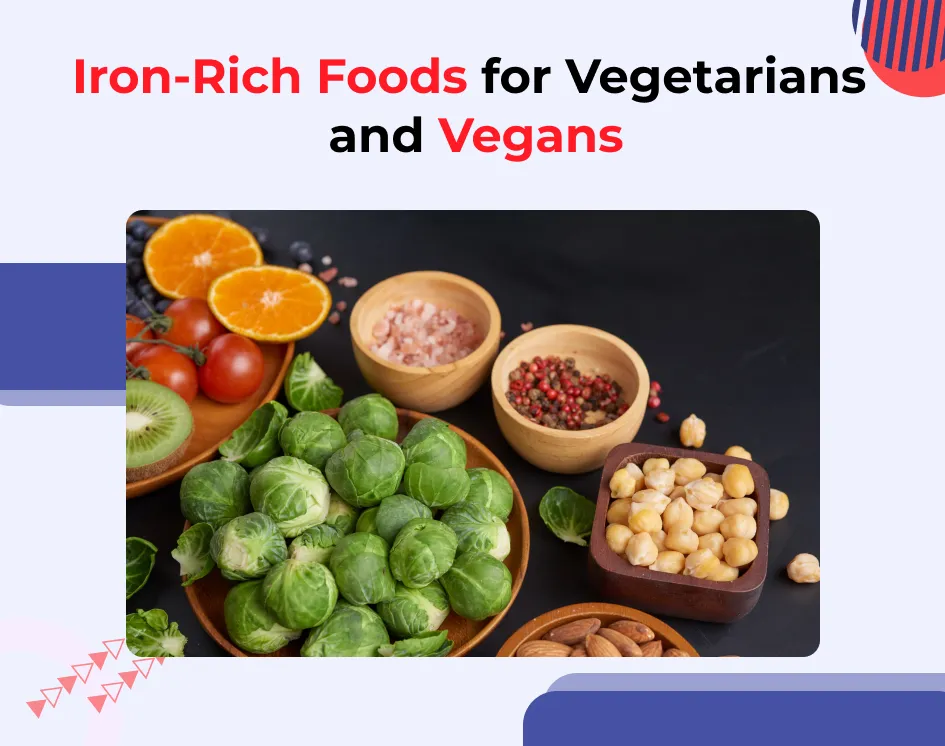
- Broccoli (cooked, 1 cup) ~1 mg iron
- Brussels sprouts (1 cup cooked) ~1.8 mg iron
- Sweet potatoes (1 medium) ~1 mg iron
Pair with vitamin C-rich tomatoes or bell peppers for better absorption.
How to improve iron absorption?
In my consultations, I often advise these strategies:
- Combine iron with vitamin C by adding citrus fruits, strawberries, or bell peppers to your meals.
- Avoid tea/coffee with meals → Tannins block iron absorption.
- Cook in cast iron pans → Small amounts of iron leach into food naturally.
- Separate calcium supplements → Calcium competes with iron for absorption.
What I tell my vegetarian patients
As a hematologist, I get vegan patients worried about anemia. My advice is simple: you do not need meat to maintain healthy iron levels. A balanced mix of lentils, greens, seeds, and vitamin C-rich fruits can keep your iron within normal range. If you feel persistent fatigue despite eating well, then a simple blood test can confirm whether you need iron supplements or further treatment.
Common mistakes vegetarians make with iron
- Relying only on leafy greens (they’re good but not enough).
- Skipping fortified foods.
- Drinking tea or coffee with meals.
- Not getting enough variety in their diet.
Myths about vegan iron sources
-
“Spinach alone is enough.” Spinach is great, but variety is key. Rely on multiple sources.
-
“Plant iron doesn’t work.” Non-heme iron works when combined with vitamin C.
-
“Supplements are always required.” Not true. Many of my vegan patients maintain normal hemoglobin with food alone.
Final Thoughts
Going vegetarian or vegan doesn’t mean giving up on healthy iron levels. By including a variety of plant-based iron sources, paying attention to absorption factors, and planning meals wisely, you can maintain strong blood health without meat.
For those experiencing fatigue, weakness, or suspected anemia, always consult a hematologist for proper evaluation and treatment.