
By Dr Karuna Kumar, MD DNB Hematologist
Key Facts
- Blood clots can occur in young adults, although they are less common compared to older age groups and often require careful clinical evaluation.
- Multiple risk factors usually act together, with lifestyle, temporary triggers, and underlying tendencies combining rather than a single isolated cause.
- Lifestyle habits, hormonal influences, and inherited clotting tendencies play a significant role in clot risk among younger individuals.
- Early symptoms can be mild or nonspecific, which may lead to delays in seeking medical attention.
- Prevention centres on regular movement, risk awareness during vulnerable periods, and timely medical guidance when concerns arise.
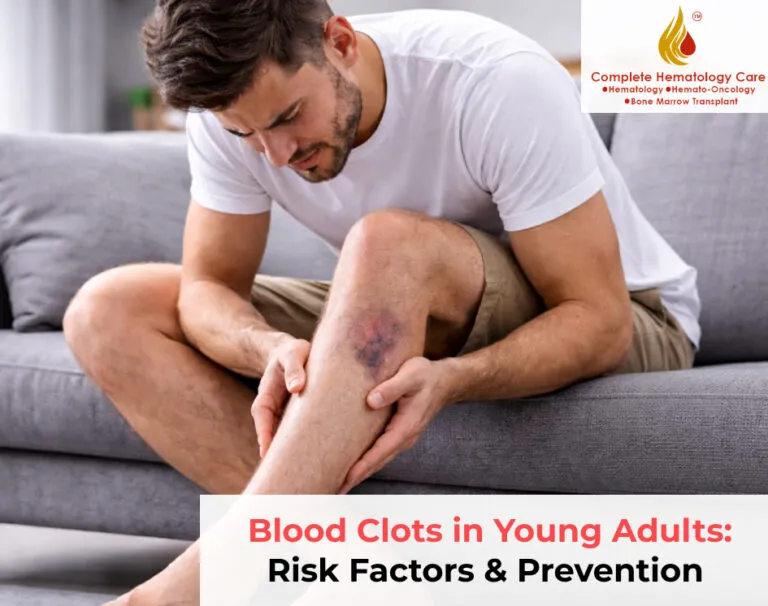
Blood clots are traditionally associated with older age, prolonged illness, or hospitalisation. But, over the last decade, clinicians are increasingly encountering blood clots in young adults, often without the classic risk profile.
For patients and families, this raises understandable concern:
Why would a healthy young person develop a clot?
Is this becoming more common?
Can it be prevented?
This article explains blood clots in young adults from a clinical, evidence-led perspective, focusing on risk factors and prevention.
What are blood clots and why do they matter?
Blood clots form when the body’s natural clotting system becomes overactive. While clotting is essential to stop bleeding, abnormal clot formation inside blood vessels can obstruct blood flow and damage organs.
Common clinical presentations include:
- Clots in deep veins (often in the shins or calves )
- Clots travelling to the lungs
- Less commonly, clots affecting the brain or abdominal vessels
In young adults, clots are less common, but when they occur, they demand careful evaluation to identify contributing factors.
Why are blood clots different in young adults?
In older individuals, clots are often linked to age-related illness, cancer, or immobility. In younger adults, the equation is different.
Doctors actively look for:
- Reversible lifestyle or situational triggers
- Hormonal influences
- Inherited clotting tendencies
- Underlying inflammatory or autoimmune conditions
In many cases, more than one factor is present simultaneously.
Common Risk Factors for Blood Clots in Young Adults
Prolonged Inactivity and Sedentary Habits
Extended immobility slows blood flow, especially in the legs.
Examples include:
- Long-haul travel without movement
- Desk-bound work with minimal physical activity
- Extended screen time without breaks
In urban Indian settings, sedentary routines have become a significant but under-recognised contributor.
Hormonal Factors
Hormonal changes can increase clotting tendency.
This includes:
- Oral contraceptive pills
- Hormone-based fertility treatments
- Pregnancy and the post-partum period
These risks remain low overall but become clinically relevant when combined with other factors such as smoking or obesity.
Smoking and Tobacco Use
Smoking alters blood vessel lining and promotes clot formation.
Even in younger individuals:
- Tobacco increases platelet activation
- It amplifies the effect of other risk factors
This applies to cigarettes as well as smokeless tobacco products commonly used in India.
Obesity and Metabolic Stress
Excess body weight is associated with:
- Chronic low-grade inflammation
- Reduced blood flow in veins
- Altered clotting protein balance
Clots related to metabolic health often develop silently and may be detected only when symptoms arise.
Recent Illness, Infection, or Surgery
Inflammation activates clotting pathways.
Young adults may develop clots:
- During recovery from severe infections
- After surgery or trauma
- Following prolonged bed rest
This risk typically reduces as recovery progresses but requires vigilance during the vulnerable period.
Genetic and Inherited Clotting Conditions
Some individuals carry inherited tendencies that make their blood clot more easily.
Key clinical points:
- These conditions often remain silent until triggered
- A clot at a young age may prompt testing
- Family history becomes particularly important
Inherited risk alone does not guarantee clots and it usually requires a second trigger.
Can blood clots occur without warning symptoms?
Yes.
Some clots develop gradually, while others present suddenly. Early symptoms may be subtle, such as:
- Unexplained limb discomfort or swelling
- Persistent breathlessness
- Chest pain that worsens with breathing
- New neurological symptoms
Young adults often delay seeking care, assuming symptoms are minor. Early evaluation is crucial.
How do doctors evaluate blood clots in young adults?
Clinical assessment is structured and methodical.
Doctors consider:
- Age and personal history
- Family history of clotting events
- Recent travel, illness, or hormonal exposure
- Lifestyle factors and body weight
Investigations may include:
- Blood tests assessing clotting pathways
- Imaging studies to locate clots
- Selective genetic or autoimmune testing when indicated
The goal is not only treatment, but risk stratification and prevention of recurrence.
Prevention Strategies for Young Adults
Prevention focuses on risk reduction, not fear-based restriction.
Maintain Regular Movement
- Break prolonged sitting with short walks
- Stretch legs during travel
- Avoid long periods of uninterrupted immobility
Address Modifiable Lifestyle Factors
- Avoid smoking or tobacco use
- Maintain a healthy body weight
- Manage chronic stress and sleep disruption
Be Aware During High-Risk Periods
Extra vigilance is needed during:
- Long-distance travel
- Post-surgical recovery
- Pregnancy and post-partum phases
- Severe infections or prolonged illness
Preventive strategies may be advised by a doctor in these situations.
When are clots risky in young age?
Medical evaluation is strongly advised when:
- A clot occurs without an obvious trigger
- There is a family history of unexplained clots
- Symptoms recur or persist
- Clotting events occur at an unusually young age
Early specialist involvement improves outcomes and prevents recurrence.
Closing Perspective
Blood clots in young adults are uncommon but clinically significant. They are rarely random events and often reflect a combination of temporary and underlying risk factors.
The reassuring reality is that most risks are identifiable and manageable. With early evaluation, informed prevention, and expert follow-up, young adults who experience or are at risk of blood clots can expect excellent long-term outcomes without unnecessary anxiety or restriction.