

By Dr Karuna Kumar, MD DNB Hematologist
No, anemia is not always the same as low blood count.
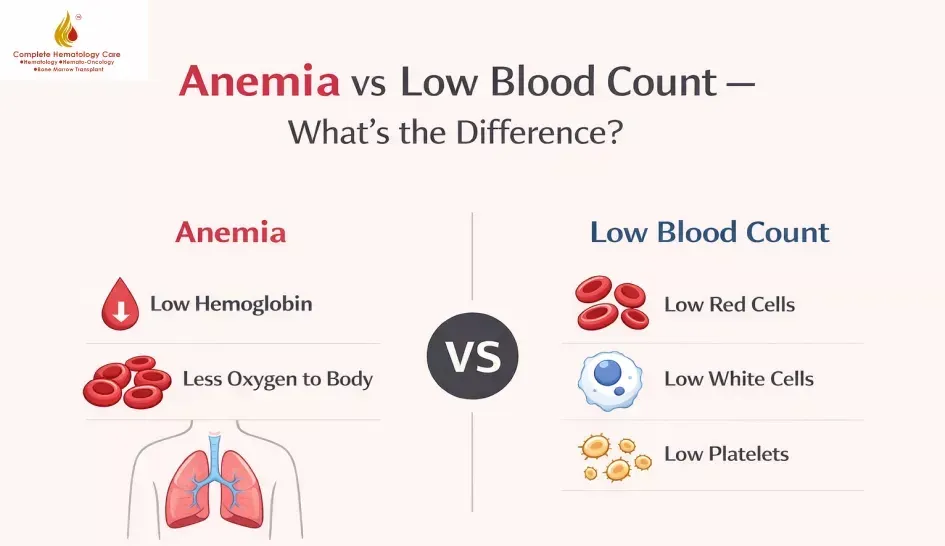
Anemia specifically means low hemoglobin in the blood. “Low blood count” is a general term people use when any value in a blood test, such as red cells, white cells, or platelets is low. So, anemia is one type of low blood count, but not all low blood counts are anemia.
What is Anemia?
Anemia is a condition in which the hemoglobin level in the blood falls below normal.
Hemoglobin is a protein inside red blood cells. Its primary function is to transport oxygen from the lungs to the rest of the body. When hemoglobin is low, the body does not get enough oxygen, which can lead to tiredness and weakness.
Red blood cells (RBCs) are the cells that contain hemoglobin. If the number of RBCs or the amount of hemoglobin inside them drops, anemia develops.
Common Causes of Anemia
Anemia is very common, especially among women and children. The most frequent causes include:
- Iron deficiency (because of inadequate dietary intake or blood loss)
- Vitamin B12 deficiency
- Folate deficiency
- Chronic diseases such as kidney disease or long-term infections
- Heavy menstrual bleeding
Iron deficiency anemia remains highly prevalent among Indian women of reproductive age, with approximately 57 % of women aged 15 – 49 years affected according to NFHS-5 data.
Nutritional gaps and pregnancy increase the risk further.
If you’d like to explore this further, see: Read more about Iron Deficiency Anemia.
What does low blood count actually mean?
Low blood count is not a formal medical diagnosis. It is a general phrase often used when someone’s Complete Blood Count (CBC) report shows one or more values below normal.
A CBC test measures:
- Red blood cells (RBCs)
- Hemoglobin
- White blood cells (WBCs)
- Platelets
So when someone says they have a “low blood count,” it could mean:
- Low hemoglobin (which usually indicates anemia)
- Low red blood cells
- Low white blood cells (leukopenia)
- Low platelets (thrombocytopenia)
Each of these has different causes and different implications.To better understand your report, you may also read: Understanding CBC Test Results
Anemia vs Low Blood Count: Key Differences
| Factor | Anemia | Low Blood Count |
|---|---|---|
| Definition | A condition where hemoglobin level is low | A general term for any low value in a CBC |
| Is it a diagnosis? | Yes, a defined medical condition | No, it is a descriptive phrase |
| Lab test used | Diagnosed through hemoglobin levels in CBC | Identified through CBC abnormalities |
| Common causes | Iron deficiency, B12 deficiency, chronic disease, blood loss | Can include anemia, infections, bone marrow disorders, chemotherapy effects |
| Severity implications | Depends on hemoglobin level and cause | Depends on which blood component is low |
This comparison helps clarify the difference between anemia and low blood count in a practical way.
When are they the same?
Anemia and low blood count are the same when the CBC shows low hemoglobin.
For example:
- If a lab report shows hemoglobin below the normal range (typically below 12 g/dL for women and 13 g/dL for men, depending on laboratory standards), this indicates anemia.
- In such cases, when someone says they have “low blood count,” they are usually referring to low hemoglobin.
So in everyday language, low blood count often means anemia but medically, they are not identical terms.
When are they different?
There are several situations where low blood count does not mean anemia.
Low Platelets (Thrombocytopenia)
Platelets help with blood clotting. When platelet levels are low:
- There may be easy bruising
- Nosebleeds or gum bleeding may occur
This condition is not anemia, even though it appears in a CBC report.
Low White Blood Cells (Leukopenia)
White blood cells help fight infections. Low levels can increase infection risk. Causes may include:
- Viral infections
- Certain medications
- Chemotherapy
Again, this is different from anemia.
Chemotherapy-Related Low Counts
Cancer treatments may reduce:
- Red blood cells
- White blood cells
- Platelets
In such cases, a person may have multiple low counts. Only the low hemoglobin component qualifies as anemia.
Understanding this distinction is important when reviewing CBC test results.
Symptoms to Watch For
Symptoms vary depending on which blood component is low. In anemia, common symptoms include:
- Fatigue
- Pale skin
- Shortness of breath
- Dizziness
- Weakness
However, mild anemia may cause no symptoms at all. Similarly, low platelets or white blood cells may produce different signs.
Symptoms alone cannot confirm the diagnosis. A proper evaluation is necessary.
The Indian context: why this matters
The topic of anemia vs low blood count is especially relevant in India.
- Iron deficiency remains widespread among Indian women.
- Vegetarian diets may contribute to Vitamin B12 deficiency.
- Pregnancy increases iron requirements significantly.
- Routine screening during pregnancy is strongly recommended.
In many cases, patients are told they have “low blood count” without understanding which parameter is abnormal. This can cause confusion or unnecessary worry.
Proper interpretation of CBC test results by a qualified hematologist ensures accurate diagnosis and appropriate treatment.
Early evaluation is particularly important if anemia is recurrent, severe, or unexplained.
When to see a hematologist?
You should consider consulting a hematologist if you experience:
- Persistent fatigue without clear reason
- Very low hemoglobin levels
- Repeated abnormal CBC reports
- Recurrent anemia
- Unexplained bruising or infections
A specialist can determine whether the issue is anemia or another type of low blood count, identify the cause, and guide safe treatment.
Timely evaluation helps prevent complications and ensures that the underlying problem is properly addressed.
Final Thoughts
Understanding the difference between anemia and low blood count helps reduce confusion after receiving lab reports. While anemia refers specifically to low hemoglobin, low blood count can involve different components of the blood.
If you are unsure about your results, it is advisable to seek professional guidance or submit your report for expert guidance by calling us. Accurate diagnosis is the first step toward appropriate treatment.