
By Dr Karuna Kumar, MD DNB Hematologist
Key Facts
- Certain foods can reduce iron absorption when eaten with meals by binding iron in the gut or competing with it during digestion, which limits how much iron the body can actually use.
- Tea, coffee, and foods high in calcium interfere with iron uptake if consumed close to iron-rich meals or supplements, even though they may be healthy on their own.
- Whole grains and legumes contain natural compounds that affect iron absorption, but traditional preparation methods like soaking, fermenting, and thorough cooking significantly reduce this effect.
- Alcohol and ultra-processed foods can disrupt normal blood formation by affecting nutrient metabolism, bone marrow function, and overall dietary quality.
- Meal timing and smart food combinations often have a greater impact on iron absorption than completely avoiding specific foods.
Anemia is not just about “low blood” or iron deficiency. It is a clinical condition with multiple causes, and dietary factors can significantly influence how well the body absorbs and utilises nutrients essential for red blood cell production.
Patients are often advised on what to eat for anemia, but an equally important and frequently overlooked question is:
Which foods can interfere with recovery and should be limited or timed carefully?
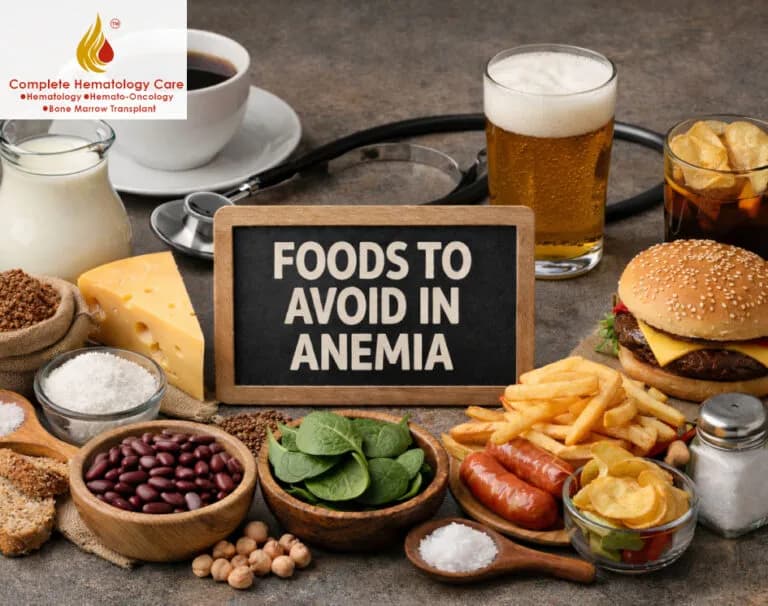
This article focuses on foods to avoid or moderate in anemia, explained through a clinical lens.
The Link Between Diet and Anemia
Red blood cell production depends on several nutrients, most notably iron, vitamin B12 , and folate. Even when intake is adequate, absorption can be impaired by certain foods and dietary habits.
Key point for patients and caregivers:
- Most “problem foods” do not cause anemia directly.
- They reduce absorption or utilisation of critical nutrients.
This distinction matters, especially in Indian diets where staple foods are otherwise healthy.
Foods that can interfere with iron absorption
Tea and Coffee
Tea and coffee contain compounds that bind iron in the gut, making it harder for the body to absorb.
- This effect is particularly relevant with plant-based iron
- Regular consumption around meals can blunt dietary iron benefit
Clinical advice: Avoid tea or coffee close to iron-rich meals or iron supplementation. Timing matters more than complete avoidance.
High-Calcium Foods With Iron-Rich Meals
Calcium competes with iron for absorption.
Examples include:
- Milk and curd
- Paneer and cheese
- Calcium-fortified foods
This interaction is often missed in vegetarian diets where dairy intake is high.
Practical approach: Calcium is important but separate it from iron-focused meals when anemia is being corrected.
Also read: How calcium really affects iron absorption in detail.
Foods high in phytates and their role in anemia
Whole Grains and Bran (When Unbalanced)
Whole grains are nutritious, but they contain phytates that can reduce iron absorption.
Common examples:
- Wheat bran
- Unsoaked millets
- Unfermented cereals
This does not mean these foods are unhealthy or should be eliminated.
Clinical nuance: Traditional Indian practices like soaking, fermenting, and cooking reduce phytate impact and improve mineral bioavailability.
Legumes and Pulses (Improperly Prepared)
Dal, chickpeas, and beans are staples, but when poorly prepared, they may limit iron uptake.
Again, preparation matters:
- Soaking
- Pressure cooking
- Fermentation
These methods significantly reduce absorption inhibitors.
Foods that can worsen specific types of anemia
Alcohol
Excessive alcohol intake interferes with:
- Bone marrow function
- Folate metabolism
- Iron utilisation
It can also mask underlying causes by affecting liver-related blood markers.
From a hematology standpoint, alcohol is a known disruptor of healthy red blood cell production.
Highly Processed and Ultra-Refined Foods
Foods high in refined flour, sugar, and unhealthy fats provide calories without micronutrients.
Examples:
- Packaged snacks
- Sugary beverages
- Bakery items made with refined flour
These foods can displace nutrient-dense meals and worsen nutritional anemia over time.
Foods that may affect iron loss or utilisation
Excessive Salt and Pickled Foods
High sodium intake may contribute indirectly by:
- Affecting gut health
- Increasing inflammation
- Reducing overall diet quality
While not a direct cause, excessive consumption can work against recovery.
Certain Antacids and Food Combinations
Though not food, frequent use of antacids alongside meals can reduce stomach acidity, which is necessary for iron absorption.
Patients often overlook this interaction.
How doctors view diet in anemia management?
From a clinical standpoint, diet is considered supportive, not standalone treatment.
Doctors assess:
- Type of anemia
- Severity and chronicity
- Underlying cause (nutritional, inflammatory, genetic, blood loss)
Dietary advice is then tailored to:
- Improve absorption
- Prevent interference with treatment
- Support long-term recovery
Self-restricting foods without guidance can delay diagnosis or correction.
When dietary avoidance alone is not enough?
If anemia persists despite dietary changes, clinicians evaluate for:
- Chronic blood loss
- Malabsorption
- Inflammatory or autoimmune conditions
- Bone marrow disorders
In such cases, food modification supports treatment but does not replace medical intervention.
Closing Perspective
Anemia management is not about fear-driven food elimination. It is about strategic nutrition, informed timing, and clinical clarity.
Most dietary “avoidances” are temporary and contextual, aimed at allowing the body to absorb what it needs to recover.
When guided correctly, food becomes an ally and not an obstacle in restoring healthy blood levels. If anemia has been identified, the most effective next step is to consult an expert, not aggressive self-restriction based on online lists.