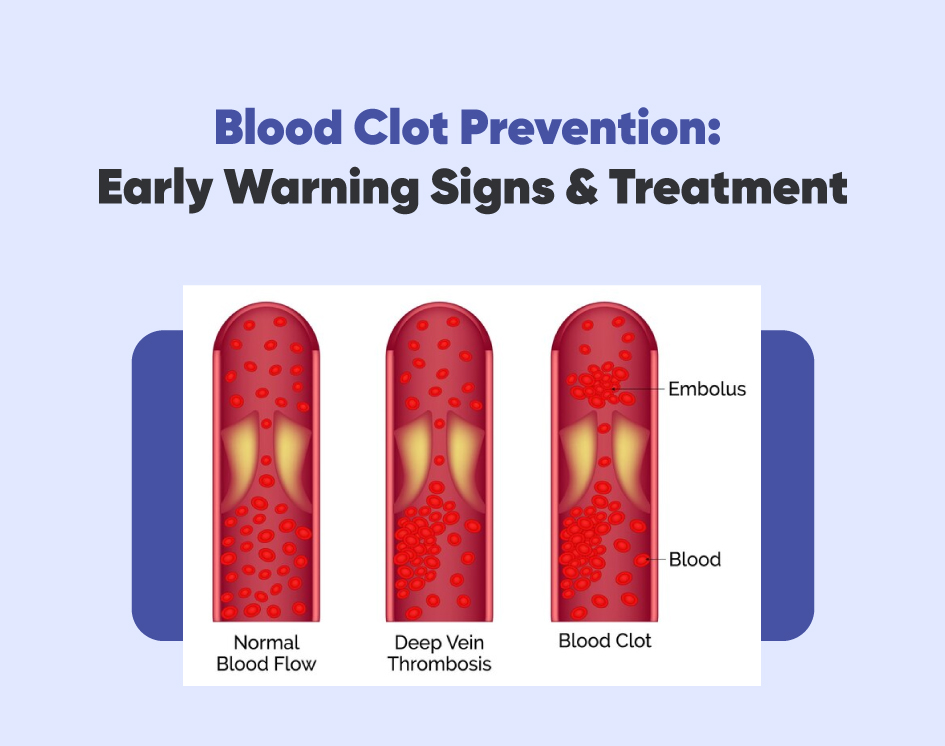

Blood clots can be life-threatening if not diagnosed on time. Conditions like Deep Vein Thrombosis (DVT) and Pulmonary Embolism (PE) often show vague symptoms that can be easily mistaken for less serious issues.
That’s where the Wells Score comes in, a simple, effective clinical tool that helps assess your risk of blood clots and guide further diagnosis.
If you’re wondering how doctors decide whether a leg swelling is a serious clot or if chest pain is potentially dangerous, this guide will give you the answers.
What is the Wells Score?
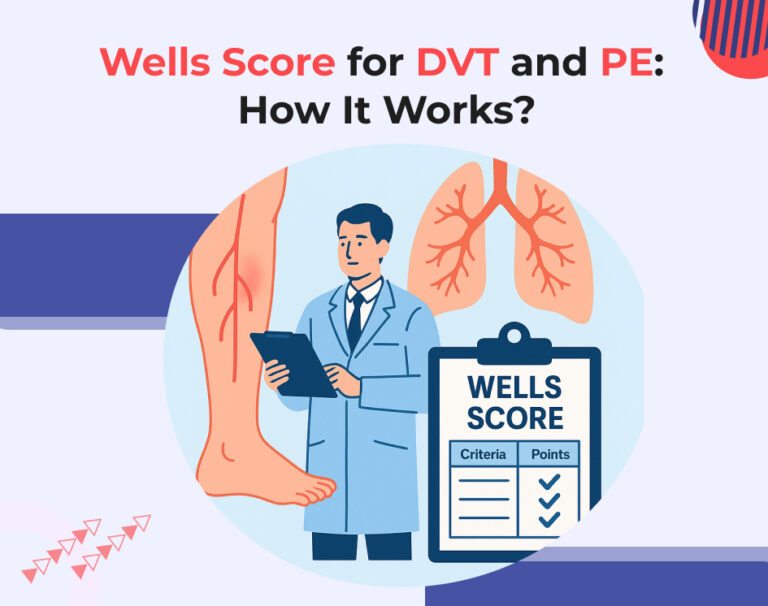
The Wells Score is a clinical prediction tool developed by Dr. Philip Wells to estimate the likelihood of a person having DVT or PE.
It uses specific clinical criteria and assigns points based on symptoms and history.
A higher score means a higher probability of having a clot, alarming doctors to move forward with imaging tests or lab work.
There are two versions of the Wells Score:
- Wells Score for DVT – assesses risk of deep vein thrombosis
- Wells Score for PE – a tool doctors use to check how likely it is that someone has a pulmonary embolism
Why does it matter?
Blood clots can be deceptive and deadly. A blood clot in your leg (DVT) can move to your lungs and cause a pulmonary embolism, which can be life-threatening without quick treatment. The Wells Score helps doctors categorize patients faster and prioritize urgent care.
By predicting the clinical probability of a clot, it avoids unnecessary tests in low-risk cases and speeds up diagnosis in high-risk ones, saving both time and lives.
How is the Wells Score done?
The Wells Score isn’t a blood or imaging test. It’s a clinical decision-making tool. Your doctor will ask questions about your symptoms, recent medical history (like surgery, immobility, or cancer), and check for signs such as leg swelling, tenderness, or abnormal heart rate.
Each factor is assigned a point value, and the total score helps determine how likely it is that you have a DVT or PE. Based on the result, your doctor may order further tests like a D-dimer blood test, ultrasound, or CT pulmonary angiogram.
Wells Score for DVT
Criteria and Scoring
The Wells Score for DVT assigns points for clinical signs and risk factors. Here’s how it works:
| Criteria | Points |
| Active cancer (within 6 months) | +1 |
| Paralysis, partial loss of movement, or recent casting of the lower limbs | +1 |
| Bedridden for more than 3 days or undergone major surgery within 12 weeks | +1 |
| Localized tenderness along deep vein system | +1 |
| Entire leg swollen | +1 |
| Calf swelling ≥3 cm compared to asymptomatic leg | +1 |
| Pitting edema confined to symptomatic leg | +1 |
| Collateral superficial veins (non-varicose) | +1 |
| Previously documented DVT | +1 |
| Alternative diagnosis at least as likely as DVT | -2 |
Interpretation:
- ≥3 points = High probability of DVT
- 1–2 points = Moderate probability
- 0 or less = Low probability
Wells Score for Pulmonary Embolism
Criteria and Scoring
The PE version uses a different set of indicators:
| Criteria | Points |
| Clinical signs of DVT | +3 |
| PE is the most likely diagnosis | +3 |
| Heart rate >100 bpm | +1.5 |
| Immobilization or surgery in past 4 weeks | +1.5 |
| Previous DVT or PE | +1.5 |
| Hemoptysis (coughing up blood) | +1 |
| Active cancer | +1 |
Interpretation (Original):
- >6 points = High probability
- 2–6 points = Moderate probability
- <2 points = Low probability
Modified Wells Score for PE:
- >4 points = PE likely
- ≤4 points = PE unlikely
This simplified system (the modified Wells Score) is often preferred in emergency settings to speed up decisions.
Modified Wells Score: what’s the difference?
The modified version is a streamlined update of the original Wells Score, especially useful for pulmonary embolism cases. Instead of three tiers (low, moderate, high), it uses a binary approach: “PE likely” or “PE unlikely.”
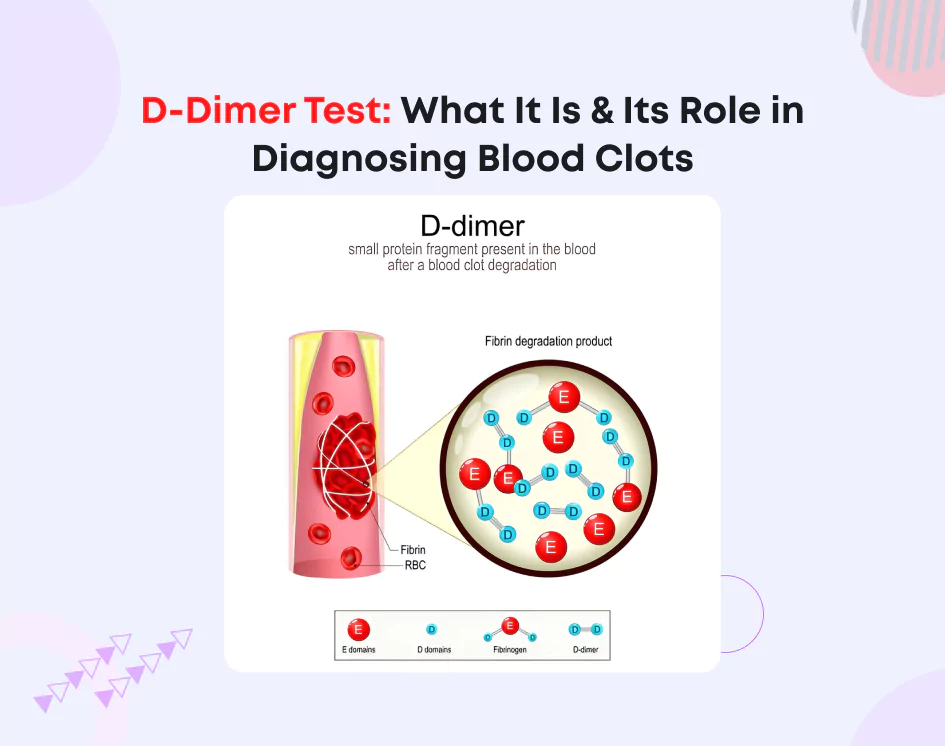
When a patient scores ≤4 (PE unlikely), doctors usually recommend a D-dimer blood test first. If the test comes back positive, the next step is a CT scan to check for clots in the lungs. If PE is likely, imaging is done right away, no waiting.
This reduces unnecessary radiation exposure and prioritizes high-risk cases, improving patient safety and outcomes.
How do doctors use the Wells Score?
Imagine this: A 60-year-old man comes into the Emergency Room with sudden chest discomfort and shortness of breath. He had surgery on his hip two weeks ago and has been mostly resting since then. His heart rate is elevated, and he feels lightheaded. His doctor performs a Wells Score assessment for PE:
- Recent surgery: +1.5
- Heart rate >100 bpm: +1.5
- PE is the most likely diagnosis: +3
Total Score: 6 → High Risk for Pulmonary Embolism
The doctor skips the D-dimer and sends him for a CT pulmonary angiogram to confirm the diagnosis.
Limitations of the Wells Score
While incredibly helpful, the Wells Score is not foolproof:
- It relies on clinical judgment, which can vary.
- Some symptoms (like leg pain) are non-specific.
- It must be used with D-dimer testing and imaging for confirmation.
So, always trust your doctor’s decision to run additional tests even if your Wells Score is low.
When should you be concerned?
You should seek medical attention immediately if you experience any of the symptoms below. These could be warning signs of a blood clot, and using early assessment tools like the Wells Score can make a critical difference.
DVT Symptoms to Watch For:
- Sudden leg swelling (usually one-sided)
- Pain or tenderness in the leg
- Warmth and redness over the area
Pulmonary Embolism Symptoms:
- Sudden shortness of breath
- Chest pain (worse with deep breathing)
- Rapid heart rate
- Lightheadedness or fainting
- Coughing up blood
If you or someone you know has these signs, seek emergency care immediately.
Need Expert Advice?
If you’re concerned about your risk of DVT or PE, speak with a hematologist today. Call us or book your consultation to get expert guidance on what to do next.