

By Dr Karuna Kumar, MD DNB Hematologist
Key Facts
- Folate deficiency often causes fatigue, weakness, and mouth ulcers.
- It leads to megaloblastic anemia with enlarged red blood cells.
- Glossitis is one of the most noticeable early symptoms.
- Diagnosis requires CBC, serum folate, and a peripheral smear.
- Most cases improve quickly with supplements and diet changes.
Folic acid (vitamin B9) plays a central role in red blood cell production, DNA synthesis, and overall metabolic health. When levels drop too low, the body starts showing clear and sometimes subtle warning signs.
If you’re experiencing fatigue, weakness, or persistent glossitis (a sore tongue), folate deficiency may be one of the underlying causes. Let’s break down the symptoms, the medical reasoning behind them, and when you should get checked.
What is folic acid deficiency?
Folic acid deficiency occurs when your body doesn’t have enough vitamin B9 to support healthy red blood cell production and cellular function. This leads to problems such as:
- Reduced red blood cell formation
- Larger-than-normal RBCs (megaloblastic cells)
- Inadequate oxygen delivery to tissues
- Neurological and gastrointestinal symptoms
It often overlaps with vitamin B12 deficiency, so proper diagnosis is important.
Symptoms of Folic Acid Deficiency
Here are the symptoms I typically see in patients:
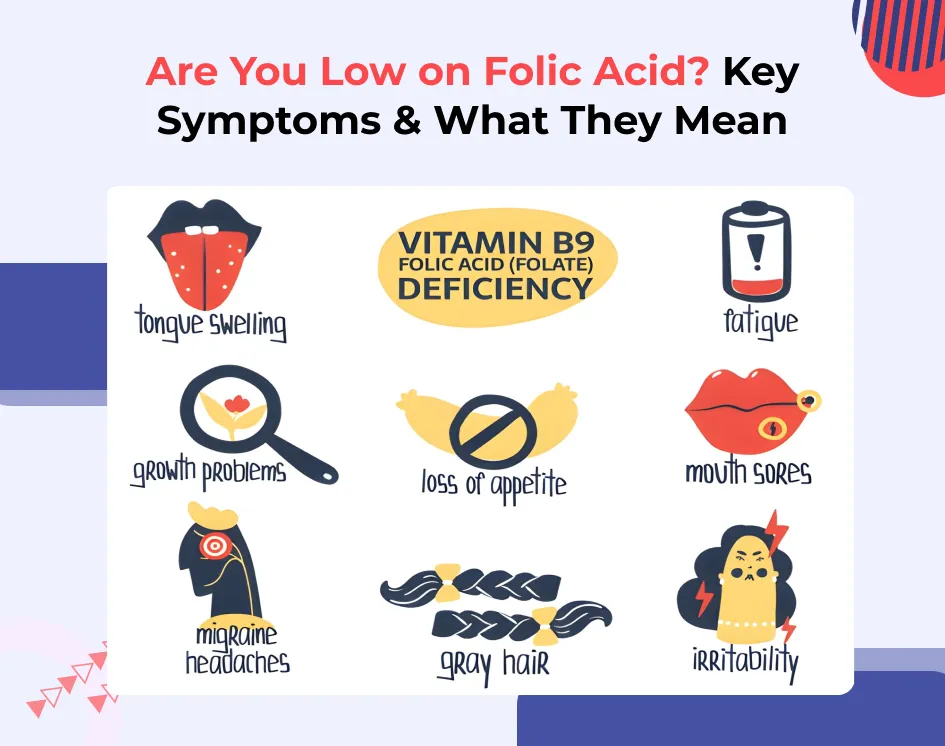
1. Persistent Fatigue and Weakness
Low folate levels reduce your body’s ability to produce healthy red blood cells. This leads to anemia, causing constant tiredness, weakness, and reduced stamina.
2. Pale Skin or Shortness of Breath
Because your tissues aren’t getting enough oxygen, you may look unusually pale or feel breathless even during light activities.
3. Sore or Swollen Tongue (Glossitis)
A bright red, swollen, painful tongue is one of the most classic signs of folate deficiency. Some patients also experience mouth ulcers.
4. Irritability and Difficulty Concentrating
Low folate can impact neurotransmitter synthesis, leading to mood changes, irritability, memory issues, or decreased focus.
5. Digestive Issues
You may experience:
- Loss of appetite
- Nausea
- Diarrhea
- Unintentional weight loss
These occur because folate helps maintain healthy digestive tract cells.
6. Headaches or Dizziness
Reduced oxygen levels from anemia can trigger frequent headaches or a persistent lightheaded feeling.
7. Tingling or Numbness (Less Common)
Although more typical of B12 deficiency, some patients with severe folate deficiency also report neurological symptoms.
8. Pregnancy-Related Complications
Folate deficiency during pregnancy increases the risk of neural tube defects and can lead to fatigue or anemia in expecting mothers.
What causes these symptoms?
The most common triggers include:
- Low dietary intake
- Alcohol overuse
- Malabsorption (celiac disease, IBD)
- Certain medications (e.g., anti-seizure drugs, methotrexate)
- Increased demand during pregnancy
- Underlying chronic health conditions
How is folic acid deficiency diagnosed?
A basic blood evaluation usually includes:
-
CBC (Complete Blood Count) To assess anemia and check for macrocytic (large) red blood cells.
-
Serum Folate and RBC Folate Levels The most definitive testing for deficiency.
-
Vitamin B12 Testing To differentiate between the two, since symptoms often overlap.
-
Peripheral Smear Review Shows characteristic megaloblastic cells.
If needed, additional tests can check for absorption issues.
Treatment Options
Treatment varies by cause, but generally includes:
- Oral folic acid supplements
- Dietary improvements (leafy greens, legumes, whole grains, citrus fruits)
- Managing underlying absorption issues
- Medication adjustments if applicable
- Higher supplementation during pregnancy (only under supervision)
Most patients start feeling better within a few weeks of starting treatment, but anemia recovery may take a little longer.
When to see a hematologist?
You should book an appointment if you notice:
- Ongoing fatigue not explained by lifestyle
- Mouth ulcers or tongue soreness
- Persistent shortness of breath
- Pale skin
- Neurological symptoms
- Previous history of deficiency
- Abnormal CBC reports
A proper evaluation helps identify whether folate deficiency is isolated or part of a broader issue such as megaloblastic anemia.
Conclusion
Folic acid deficiency is common, highly treatable, and often overlooked until symptoms become severe. Recognizing the early signs can lead to timely diagnosis and faster recovery. If you’re experiencing these symptoms or have an abnormal CBC, seeking a hematology consultation can help you identify the cause and get the right treatment plan.