
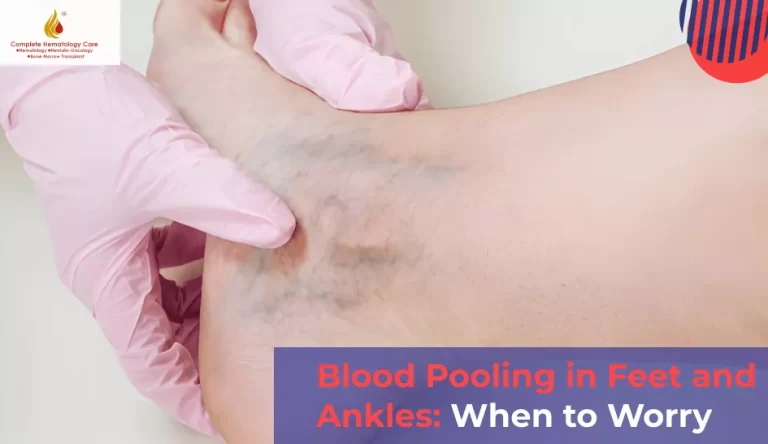

Blood pooling in the feet, ankles, or toes is a common but often misunderstood symptom. Many people notice their feet becoming heavy, swollen, reddish, or bluish, especially after long periods of standing, sitting, or following an injury.
While this can be harmless in some cases, persistent blood pooling may indicate an underlying circulation or medical issue that needs attention.
This article explains what blood pooling is, why it happens, common symptoms, and when medical evaluation is important.
What is blood pooling?
Blood pooling refers to the accumulation of blood in the lower parts of the body, particularly the feet, ankles, and sometimes the hands.
Normally, veins return blood back to the heart with the help of valves and muscle movement. When this mechanism is impaired, blood can collect in dependent areas, most commonly the lower limbs.
Common symptoms of blood pooling in feet
People experiencing blood pooling may notice:
- Swelling in feet and ankles
- Reddish, purplish, or bluish discoloration
- A feeling of heaviness or tightness
- Warmth in the feet
- Mild pain or discomfort
- Symptoms worsening when standing or sitting for long periods
- Improvement when legs are elevated
Blood pooling may affect:
- The bottom of the feet
- Toes
- Ankles
- Both feet and hands in some conditions
Causes of blood pooling in feet and ankles
Prolonged Standing or Sitting
When you stand or sit for long periods, gravity makes it harder for blood to travel back to the heart. This is one of the most common and benign causes of blood pooling in the feet.
Venous Insufficiency
Chronic venous insufficiency develops when the valves in the leg veins become weak or stop functioning properly. Blood flows backward and collects in the lower limbs, leading to persistent swelling and discoloration.
Blood Pooling After Injury
After an injury to the foot or ankle, inflammation and local vessel changes can cause temporary blood pooling. This usually improves as healing progresses.
Dehydration and Poor Circulation
Low fluid levels can thicken blood and reduce circulation efficiency, making pooling more noticeable, especially in warm climates.
Autonomic Nervous System Disorders
Conditions such as postural orthostatic tachycardia syndrome (POTS) can cause blood to pool in the feet and hands when standing.
Heart, Kidney, or Liver Conditions
In some cases, blood pooling is related to systemic conditions that affect fluid balance and circulation, leading to ankle and foot swelling.
Certain Medications
Blood pressure medicines, calcium channel blockers, and some hormonal treatments can contribute to fluid retention and blood pooling.
Blood pooling in feet when sitting or standing
- When sitting: Reduced muscle movement slows venous return, especially if legs are dangling.
- When standing: Gravity causes blood to settle in the feet, particularly if vein valves are weak.
Regular movement and posture changes help reduce this effect.
When is blood pooling a concern?
You should seek medical advice if blood pooling is:
- Persistent or worsening
- Associated with pain, ulcers, or skin changes
- Accompanied by shortness of breath or chest discomfort
- Occurring in only one leg suddenly (could indicate a clot)
- Present along with fatigue, dizziness, or palpitations
How is blood pooling evaluated?
A doctor may recommend:
- Physical examination
- Blood tests
- Doppler ultrasound of leg veins
- Heart or kidney evaluation if needed
Managing and preventing blood pooling in feet
- Elevate legs whenever possible
- Avoid prolonged standing or sitting
- Stay well hydrated
- Engage in regular walking or calf exercises
- Use compression stockings if advised
- Manage underlying medical conditions
Key Takeaway
Blood pooling in the feet and ankles is often related to circulation and gravity, but it should not be ignored if persistent or associated with other symptoms. Early evaluation helps rule out serious causes and prevents long-term complications.
If you notice recurring swelling, discoloration, or discomfort in your feet, consulting a healthcare professional is the safest next step.