

By Dr Karuna Kumar, MD DNB Hematologist
One of the most common questions I hear when someone sees a low platelet count on a blood report is: “What should I eat to bring it up?”
The honest answer is that there is no single fruit, juice, or home remedy that works for everyone. A low platelet count can happen for many different reasons, and the right treatment depends on finding that reason.
A low platelet count is called thrombocytopenia. Platelets help the blood form clots and stop bleeding. Food can support your general nutrition, and it may help when a confirmed nutritional deficiency is contributing to the problem. But no specific food is proven to rapidly increase platelet counts.
So, think of food as part of supportive care—not as a replacement for diagnosis, monitoring, or treatment.
First, why are the platelets low?
Before choosing a diet, it is important to understand what may be causing the low count. Platelets can fall when:
- The bone marrow is not making enough platelets
- Platelets are being destroyed by the immune system
- Platelets are being used up during an infection or another illness
- The spleen is holding on to more platelets than usual
- A medicine is affecting platelet production or survival
Some common causes include:
- Infections: Dengue and other viral or bacterial infections can temporarily lower platelet counts.
- Medicines: Some antibiotics, chemotherapy medicines, heparin, and other drugs can cause thrombocytopenia in certain people.
- Immune thrombocytopenia (ITP): The immune system destroys platelets or interferes with their production.
- Nutritional deficiencies: Severe vitamin B12 or folate deficiency can affect blood-cell production. Iron deficiency may also be associated with abnormal blood counts, but it should not be assumed to be the cause without appropriate testing.
- Liver or spleen problems: These can affect how platelets are produced, stored, or distributed.
- Bone marrow disorders: Aplastic anemia, leukemia, myelodysplastic syndromes, and other marrow conditions can affect blood-cell production.
- Pregnancy-related conditions: Some pregnancy-related causes need urgent assessment and specialist care.
This is why simply trying to “increase platelets” with food may not solve the underlying problem.
What platelet count is normal?
For many adults, the usual laboratory reference range is approximately 150,000–450,000 per µL. The exact range can vary slightly from one laboratory to another.
But the number should not be looked at in isolation. Your doctor will also consider:
- Whether the count is stable, falling, or recovering
- The reason for the low count
- Whether you have bleeding or other symptoms
- Your age, pregnancy status, and other medical conditions
- The medicines you are taking
There is no single platelet number that tells us how serious the situation is for every person.
When should you seek medical help?
If your platelet count is persistently low, falling, unexplained, or associated with bruising or bleeding, arrange a medical review.
Seek urgent medical care if you have:
- Bleeding that does not stop with pressure
- Blood in the vomit, urine, or stool, or black tarry stools
- Very heavy menstrual bleeding
- Repeated nosebleeds or bleeding from the gums
- Severe or sudden headache
- Confusion, fainting, or unusual drowsiness
- Severe abdominal pain or repeated vomiting
- Difficulty breathing
- Marked weakness or a rapidly falling platelet count
If you have dengue or another acute infection, follow the monitoring and follow-up plan given by your treating team. In dengue, platelet count alone does not decide disease severity, hospital admission, or the need for a platelet transfusion.
What should you eat when platelets are low?
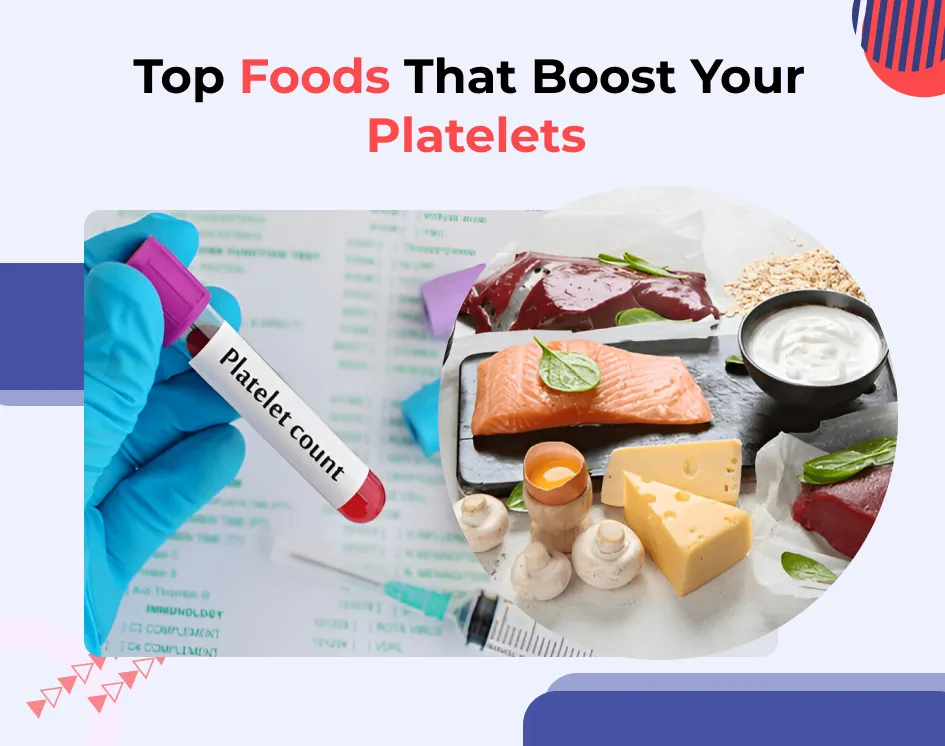
The best approach is a balanced diet that gives your body enough calories, protein, vitamins, and minerals. This supports general recovery, especially when a confirmed nutritional deficiency is present.
It is better to think in terms of overall nourishment rather than a list of “platelet-boosting foods.”
1. Include enough protein
Protein supports tissue repair and recovery. Depending on your preferences and other health conditions, you may include:
- Eggs
- Milk, curd, and paneer
- Dal, beans, and chickpeas
- Fish or chicken
- Tofu and other soy foods
- Nuts and seeds in suitable portions
If you have kidney disease, liver disease, diabetes, or another condition requiring dietary restrictions, ask your doctor or dietitian to tailor the plan for you.
2. Eat folate-rich foods
Folate is involved in normal blood-cell production. Good food sources include:
- Green leafy vegetables
- Lentils, chickpeas, and beans
- Peas and other legumes
- Citrus fruits
- Avocado
- Fortified grains and cereals
These foods are nutritious, but eating them does not prove that you have a folate deficiency or replace the need for testing and treatment when required.
3. Include sources of vitamin B12
Vitamin B12 is important for normal blood-cell production. Sources include:
- Eggs
- Milk and other dairy products
- Fish, chicken, and meat
- Fortified foods for people following a vegetarian or vegan diet
If your doctor suspects a B12 deficiency, blood tests can help confirm it. Treatment may require a specific supplement or another medical plan.
4. Choose iron-containing foods when appropriate
Iron is important for hemoglobin and red-blood-cell production. Food sources include:
- Meat, poultry, and fish
- Lentils, beans, and chickpeas
- Green leafy vegetables
- Sesame seeds and other seeds
- Fortified cereals
Vitamin C–containing foods can help the body absorb iron from plant foods. This does not mean that vitamin C or iron-rich foods rapidly increase platelet counts. Take iron supplements only when a deficiency is confirmed or your clinician recommends them.
5. Eat fruits and vegetables for overall health
Fruits and vegetables provide fiber, fluids, vitamins, and minerals. Depending on your health needs, you may include guava, citrus fruits, amla, tomatoes, carrots, berries, watermelon, and papaya.
Papaya fruit is an ordinary nutritious food. It should not be confused with papaya leaf extract, which is discussed below and is not a proven treatment for thrombocytopenia or dengue.
What should you avoid or use cautiously?
Alcohol
Alcohol can affect the bone marrow and liver and may increase bleeding risk in some situations. Avoid it if your doctor has advised you to do so, particularly if your platelet count is low or you have liver disease.
Unsupervised herbal products
Herbal products and concentrated supplements may contain variable ingredients, interact with medicines, or affect bleeding risk. Do not start them without discussing them with your doctor.
Aspirin, ibuprofen, and other painkillers
Some painkillers and anti-inflammatory medicines can affect platelet function or increase bleeding risk. Ask your doctor which pain-relief medicine is appropriate for you.
If you take an anticoagulant or antiplatelet medicine, do not stop it on your own. Any change must be made by the prescribing clinician.
If you take warfarin, do not make sudden major changes to your vitamin K intake without discussing them with your anticoagulation team. You may not need to avoid green vegetables, but consistency and monitoring are important.
What about papaya leaf, giloy, and other home remedies?
Papaya leaf extract, giloy, and other home remedies are often discussed when people are trying to raise platelets, especially during dengue.
The evidence for these remedies is limited and low quality. None is proven to prevent bleeding, severe dengue, or the need for medical treatment. Do not use them instead of medical review, blood-test monitoring, prescribed treatment, or emergency care.
Concentrated herbal preparations should not be given to children or pregnant patients without medical guidance.
A simple, balanced meal plan
This is an example of a balanced meal pattern. It is not a platelet-raising treatment.
- Breakfast: Vegetable upma, oats, or idli with curd. Add an egg or another protein source if suitable.
- Mid-morning: Guava, orange, amla, watermelon, or papaya.
- Lunch: Rice or roti with dal, vegetables, curd, and paneer, fish, chicken, tofu, or another protein source.
- Evening: Fruit, unsalted nuts, or a light snack suited to your medical condition.
- Dinner: Roti or rice with vegetables and a protein source such as dal, beans, paneer, eggs, fish, or chicken.
- Fluids: Drink fluids according to your doctor’s advice, especially during fever, vomiting, diarrhea, or dengue.
If you have diabetes, kidney disease, heart failure, liver disease, food allergies, or fluid restrictions, your meal plan may need to be modified.
How quickly will the platelet count recover?
There is no fixed recovery time. It depends on the cause, the treatment, the severity of the illness, and your overall health.
If a confirmed nutritional deficiency is contributing to the problem, correcting it may help over time. But platelet counts should be monitored as advised. Persistent, worsening, or unexplained thrombocytopenia needs medical evaluation.
Do not delay medical care while waiting for food or supplements to change the platelet count.
Frequently asked questions
Final takeaway
When platelets are low, do not focus only on finding a “platelet-boosting” food. Focus on finding the cause, following the recommended tests and treatment, and eating a balanced diet that supports your overall health.
No specific food, juice, or herbal remedy is proven to rapidly increase platelet counts. Seek urgent medical care for significant bleeding, suspected internal bleeding, severe symptoms, or a rapidly falling count.
If you or your loved one has persistent or unexplained low platelets, book a consultation for proper evaluation and personalized advice.